Ants Back Again in Salem & Seymour This Spring? Discover What Actually Works for Lasting Control!
Every spring, ants (Formicidae) seem to march right back into homes across Salem, IN and Seymour, IN. If you're tired of these persistent pests, our expert guide reveals why they keep returning, identifies the local culprits, and shares proven strategies for effective ant control. Learn what truly works beyond temporary fixes to keep your home ant-free this season with Greener Pest Management.
Why Ants (Formicidae) Keep Coming Back Every Spring in Salem & Seymour (And What Actually Works)
As the days grow longer and warmer here in Southern Indiana, bringing with them the promise of spring flowers and outdoor activities, many homeowners in Salem, IN, and Seymour, IN, face a less welcome annual tradition: the return of ants (Formicidae). One day your home feels secure, the next, you spot a line of tiny invaders marching across your kitchen counter or along your baseboards. It can feel like an endless battle, with these persistent pests reappearing year after year. But why do ants (Formicidae) keep coming back every spring, and what can you actually do to stop them for good?
The Annual Spring Surge: Why Ants (Formicidae) Seem to Appear Overnight
The sudden appearance of ants (Formicidae) in spring isn't a random event; it's a predictable biological response to changing weather. Throughout the colder months, ant (Formicidae) colonies in areas like Washington County and Jackson County slow down. They might enter a state of reduced activity, and while they don't truly hibernate, their foraging efforts are minimal. As soon as the temperatures start to rise consistently, however, it's a signal for the colony to kick into high gear.
This warmth tells the ants (Formicidae) that it's time to expand, find new food sources, and grow their numbers. They've been waiting for this moment, and your home, with its warmth, food, and water, becomes an irresistible target. Those ants (Formicidae) you see weren't just born overnight; they were part of an existing colony that's now actively sending out scouts to find resources. These scouts lay down invisible scent trails, and once a food source is found, more workers follow, creating those familiar marching lines. It’s their way of waking up and getting ready for the busy season.
Why Do Ants (Formicidae) Keep Coming Back? The Science Behind the Scourge
The recurring nature of ant (Formicidae) problems stems from a few key factors. First, ants (Formicidae) are incredibly resilient. Their colonies can be vast, often hidden deep within soil, wood, or even wall voids. What you see on your kitchen counter is just a tiny fraction of the total population. Second, they are driven by basic needs: food, water, and shelter. If your home consistently provides these, they will consistently seek them out.
Furthermore, many common ant (Formicidae) species found in Salem and Seymour have reproductive strategies that make them particularly tough to eliminate. They can produce numerous new queens, create satellite nests, or simply replace lost workers very quickly. This constant drive to survive and thrive means that a "quick fix" often only addresses the symptoms, not the root cause, leading to their inevitable return when conditions are right again. Understanding the specific type of ant (Formicidae) you're dealing with is the first step toward effective and lasting control.
Meet the Main Culprits: Top Ants (Formicidae) Invading Salem & Seymour Homes
While there are many types of ants (Formicidae) in Indiana, homeowners in our service areas of Salem and Seymour most commonly encounter three particular species that consistently cause problems. Knowing which ant (Formicidae) you’re dealing with is absolutely critical because what works for one species can be completely ineffective, or even counterproductive, for another. This is why a thorough inspection is always the most important first step in any effective ant control plan.
Odorous House Ants (Tapinoma sessile) – The Sneaky Invaders
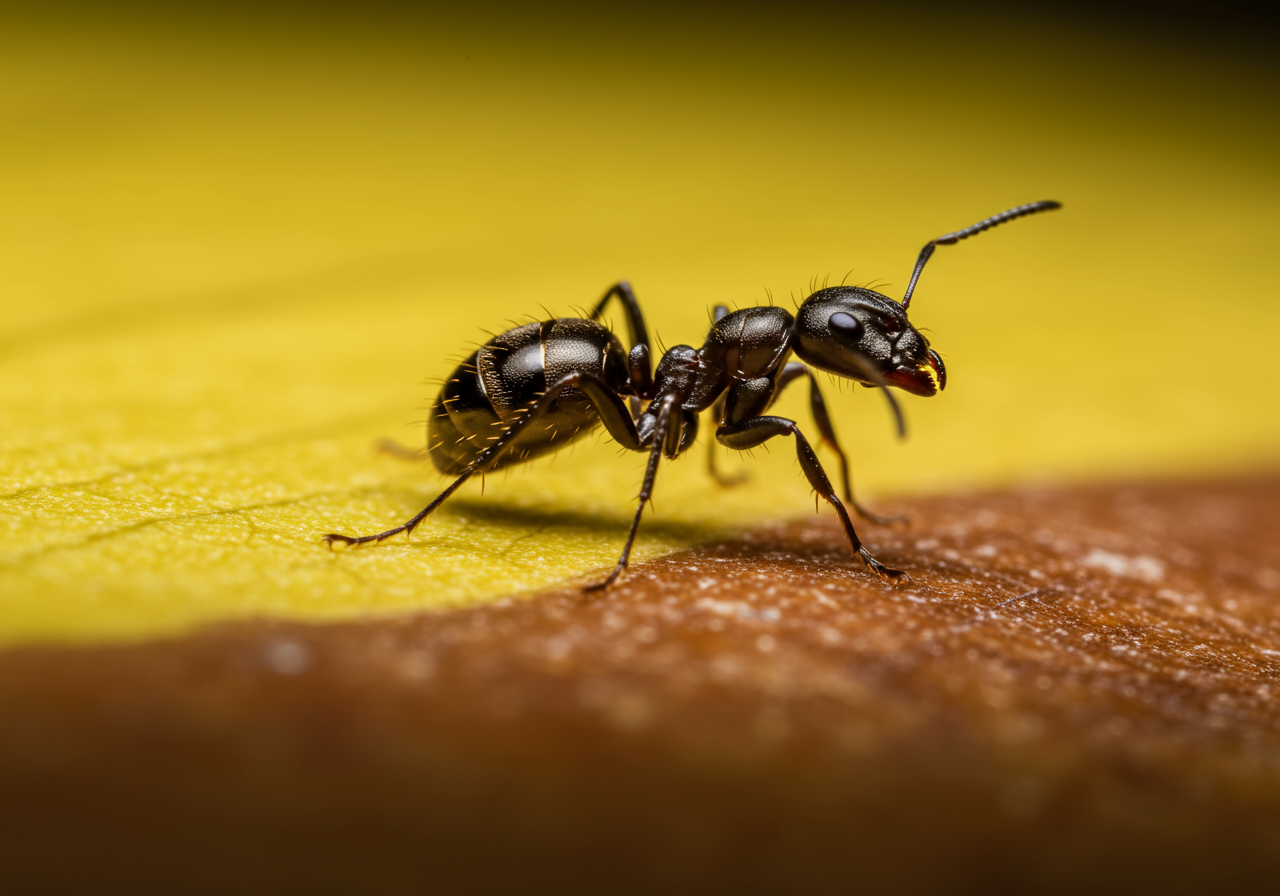
Often the most common invaders in homes across Southern Indiana, odorous house ants (Tapinoma sessile) are small, dark brown or black, and are notorious for the distinct, somewhat unpleasant "rotten coconut" smell they emit when crushed. They are incredibly adaptable and can nest practically anywhere – under rocks, in soil, inside wall voids, or even behind insulation. If you’ve seen tiny ants (Formicidae) parading across your kitchen or bathroom counters in Salem or Seymour, there’s a good chance they’re odorous house ants (Tapinoma sessile).
What makes these ants (Formicidae) so challenging is their unique colony structure. Odorous house ants (Tapinoma sessile) are multi-queen species, meaning a single colony can have dozens or even hundreds of queens. This allows them to quickly replace lost workers and reproduce at an astonishing rate. They also readily form satellite colonies – smaller sub-nests that are connected to the main colony but are often located in different areas, sometimes even inside your home. If you spray the ants (Formicidae) you see with a fast-acting insecticide, you might kill a few hundred workers, but the queens in the main and satellite nests are untouched. In fact, spraying can stress the colony, causing it to "bud" or split into even more satellite colonies, making your ant (Formicidae) problem even worse in the long run. This is why quick-kill DIY methods often fail spectacularly against odorous house ants (Tapinoma sessile).
Carpenter Ants (Camponotus spp.) – The Wood Worriers
Carpenter ants (Camponotus spp.) are significantly larger than odorous house ants (Tapinoma sessile), often black, red and black, or entirely red. Unlike termites, carpenter ants (Camponotus spp.) don't eat wood; instead, they excavate it to create smooth, clean galleries for their nests. Their presence is a strong indicator of moisture problems in your home because they prefer to nest in damp, decaying wood. This could be due to a leaky roof, faulty plumbing, moisture around window frames, or even wood in contact with soil.
Homeowners in Salem and Seymour often spot carpenter ants (Camponotus spp.) as large black ants (Formicidae) foraging for food, or they might notice small piles of sawdust-like material (frass) that they push out of their tunnels. "Spraying the trail" of carpenter ants (Camponotus spp.) is almost entirely ineffective. These foragers are just workers looking for food; the real problem is the nest, which could be deep within a wall, a crawl space, or even in a tree stump outside. Effective control for carpenter ants (Camponotus spp.) demands a thorough inspection to locate all the nests, both primary and satellite. Without finding and treating the nests directly, the problem will persist and potentially worsen any existing moisture damage to your home's structure.
Pavement Ants (Tetramorium immigrans) – The Foundation Explorers
Pavement ants (Tetramorium immigrans) are small, dark brown to black ants (Formicidae) that are commonly found nesting under sidewalks, driveways, patios, and building foundations. As their name suggests, they love to nest in or under concrete and asphalt. They often gain entry into homes through cracks in the foundation, gaps around pipes, or small openings where utility lines enter the building.
If you’ve ever noticed small mounds of dirt or sand pushing up through cracks in your driveway or along the edge of your patio in Salem, IN, or Seymour, IN, it’s likely the work of pavement ants (Tetramorium immigrans). These are the "ant hills" that homeowners frequently complain about. While they often nest outdoors, they readily forage indoors for food, especially crumbs, greasy foods, and sugary spills. Their presence inside can be a nuisance, and their outdoor nesting habits can sometimes undermine pavers or patio stones over time if their colonies become extensive. Finding their entry points and treating the nest sites around your foundation is key to keeping these industrious ants (Formicidae) out of your home.
Understanding "Ant Hills": When to Worry and When Not To
When you see an "ant hill" in your yard or driveway, it’s natural to feel a surge of concern. However, it’s important to understand that not all ant (Formicidae) mounds pose a threat to your home. Many species of ants (Formicidae) play a beneficial role in the ecosystem, aerating soil and consuming other insects, and their outdoor nests aren't causing any problems for you. Indiscriminately treating every ant (Formicidae) mound you see can harm beneficial insects and the environment without actually solving a pest issue.
So, when does an ant (Formicidae) mound warrant concern from a pest control perspective? A mound becomes a problem if you observe ants (Formicidae) from that mound consistently trailing directly into your home. It’s also concerning if the nest is built tight against your home’s foundation, as it could indicate potential entry points. While less common with the species we typically see, some ant (Formicidae) species can sting, and mounds of these could be a hazard for children or pets. Finally, if you suspect carpenter ants (Camponotus spp.) are involved, an outdoor nest near your home can be a sign of moisture issues in your property, even if the main nest isn't inside. The key is observation: if they’re not acting like a pest, they likely aren’t a pest.
What You Can Do Right Now: Your "First Steps" Checklist
Before you reach for a can of bug spray, take a deep breath. Addressing an ant (Formicidae) problem effectively starts with some smart, non-chemical steps.
First and foremost, stop random spraying. As discussed, especially with odorous house ants (Tapinoma sessile), killing visible ants (Formicidae) without addressing the colony can actually worsen the problem by causing them to split and form new nests. This creates more headaches in the long run.
Next, focus on reducing pressure points around your home. This means taking away things that attract ants (Formicidae) or give them easy access. Trim back any vegetation – bushes, tree branches, or vines – that are touching your house. These act as bridges for ants (Formicidae) to get onto your walls and find entry points. Fix any leaky outdoor faucets or irrigation systems, as consistent moisture attracts many ant (Formicidae) species, particularly carpenter ants (Camponotus spp.). Where possible, ensure mulch or soil beds are not piled directly against your foundation, creating a hidden, moist habitat right next to your home. Seal visible cracks and openings in your foundation, around windows, and where utilities enter the house.
Finally, become a detective and track their patterns. Where exactly are you seeing the ants (Formicidae)? Are they in the kitchen, bathroom, basement? What time of day are they most active? Are they heading towards a particular food source or water leak? Are they tiny black ants (Formicidae), or larger ones? All of this information is incredibly valuable. Your goal is to gather clues, because the more you know about the ant (Formicidae) activity, the better informed a professional can be in identifying the species and developing a targeted solution.
When to Call a Pro for Ant Control in Salem & Seymour
Even with the best DIY efforts, some ant (Formicidae) problems are simply too persistent or complex for homeowners to handle alone. If you find yourself facing recurring ant (Formicidae) trails despite your best efforts, or if the activity has spread to multiple rooms in your home, it's time to consider professional ant control in Salem, IN, or Seymour, IN.
A professional exterminator can accurately identify the ant (Formicidae) species, which is the most crucial step for effective treatment. They can also perform a thorough inspection to locate hidden nests, entry points, and the conditions attracting ants (Formicidae) to your property. If you suspect carpenter ants (Camponotus spp.) due to larger ants (Formicidae) or signs of wood damage like small piles of frass, calling a professional is vital to prevent potential structural damage to your home. If you're tired of the seasonal cycle of ant (Formicidae) invasions and want a long-term solution that breaks the pattern, a professional pest management service can provide the expertise and targeted treatments needed.
Greener Pest Management: Your Local Solution for Lasting Ant (Formicidae) Control
At Greener Pest Management, we understand the frustration of dealing with persistent ants (Formicidae) in your Southern Indiana home. We proudly serve homeowners across Washington County and Jackson County, including Salem, IN, and Seymour, IN, with expert ant control services designed for lasting results. Our approach isn't about generic sprays; it's about smart, targeted pest management.
When you contact us, our experienced technicians will conduct a detailed Pest Assessment to accurately identify the specific ant (Formicidae) species you're dealing with. This is paramount because, as you've learned, different ants (Formicidae) require different strategies. We'll then find the "drivers" – the underlying conditions or nesting sites that are attracting and supporting the colony. With this crucial information, we can build a comprehensive ant control plan that matches the ant's (Formicidae) biology, ensuring we address the root cause, not just the visible symptoms. Our goal is to provide lasting relief, minimizing unnecessary product use and focusing on precise application where it matters most.
Don't let ants (Formicidae) take over your home again this spring. If you're seeing persistent ant (Formicidae) activity in Salem, IN, Seymour, IN, or any of our service areas, call Greener Pest Management today at (812) 404-8250 for an expert Pest Assessment. Let us help you reclaim your home with effective, responsible ant control.
Get Your Free Pest Control Quote in Campbellsburg, IN
Are pests making your Campbellsburg, Indiana home uncomfortable? Greener Pest Management is ready to help! Fill out our simple form below, and our friendly team will call you back promptly with a free, no-obligation quote for our effective and environmentally-friendly pest control services. Let us help you enjoy a pest-free home again!
More Blogs
Some other blogs you might be interested in